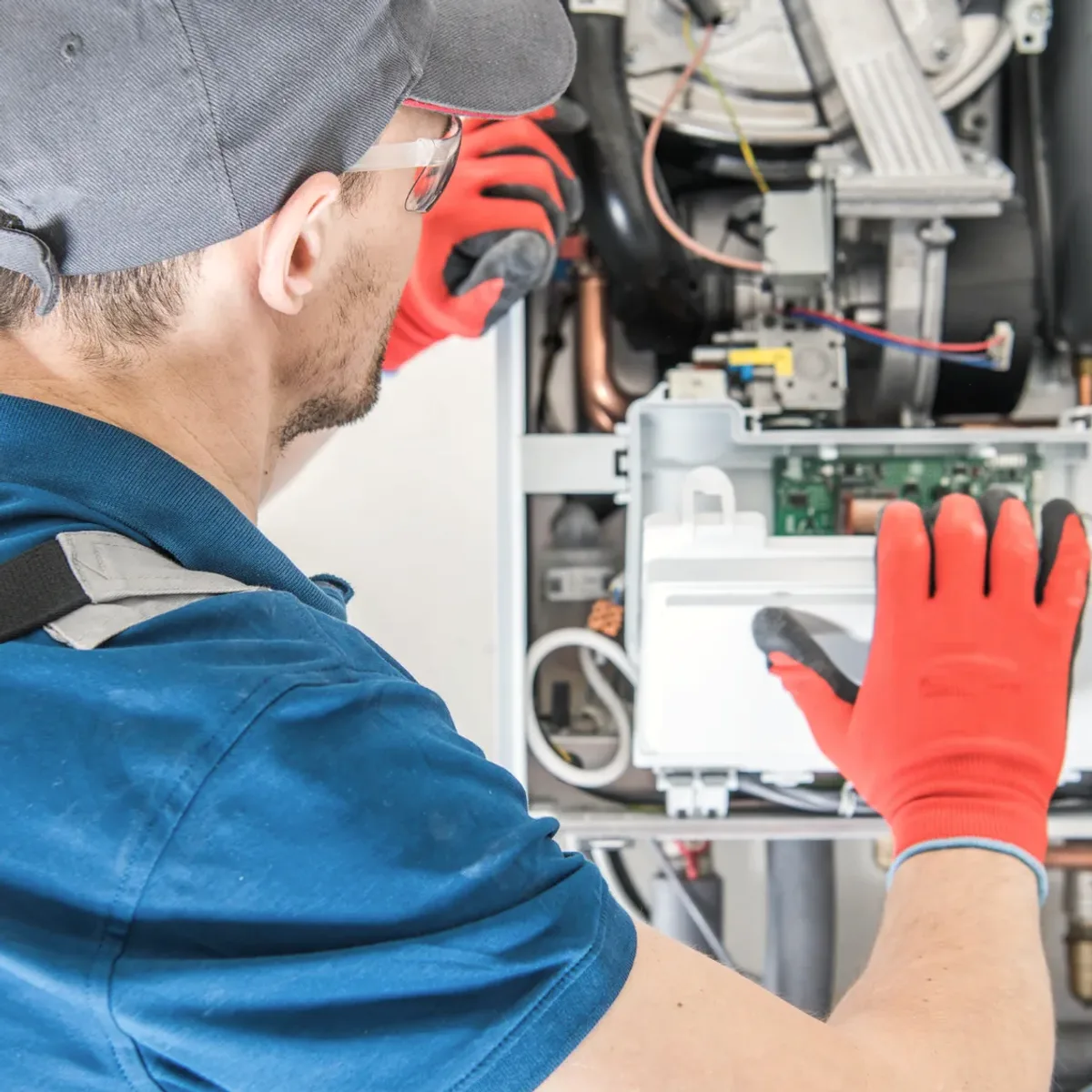
Request boiler service for a property in Pickering. Include the equipment, the problem or planned work, and your location so the request can be reviewed.
What boiler and heating-loop details matter when diagnosing no heat, a leak, or pressure loss?
Boiler service depends on both the boiler design and the hydronic distribution it supplies. A natural-draft cast-iron boiler connected to radiators differs from a condensing boiler serving in-floor loops in its venting, controls, and operating requirements. No heat, a leak, or pressure loss can involve ignition, a circulator, an expansion tank, a relief valve, or another fault. Assessment should identify the actual cause and distinguish repair, maintenance, and replacement rather than treating every boiler alike.
Record the boiler make and model, fuel, visible fault indication, and whether the system serves radiators or in-floor loops. Note which areas lack heat and whether pressure or leakage has changed, without opening the boiler or adjusting safety controls. These details help distinguish ignition faults from circulation, expansion, or distribution problems. Installation and maintenance decisions also depend on the boiler design, venting, control arrangement, and manufacturer instructions.
Ignition, circulator, expansion-tank, relief-valve, and pressure-related faults.
Differences between cast-iron and condensing boilers, fuels, radiators, and in-floor loops.
Inspection-led maintenance and repair-versus-replacement decisions.
Assessment and Scope
Questions for the Proposed Work
01
Separate ignition faults from circulation and pressure faults
A boiler that does not fire may have an ignition, fuel, or control fault, while cold radiators or loops can point to circulation or distribution issues. Pressure loss or water near a relief valve can involve leakage, expansion-tank condition, or another system fault. These causes require different tests, so a symptom should not be treated as a diagnosis. Fuel, combustion, pressure controls, and internal electrical components need qualified assessment.
02
Match replacement design to the hydronic system
A replacement assessment should compare the existing boiler design, fuel, venting route, and controls with the connected emitters. Natural-draft cast-iron equipment serving radiators has different requirements from a condensing boiler connected to in-floor loops. Water-temperature needs, piping arrangement, and control compatibility affect equipment selection and installation scope. If propane or oil is used, the new boiler must be suitable for that fuel; a gas model is not an automatic substitute.
03
Base maintenance on the boiler and inspection findings
Maintenance should follow the boiler manufacturer’s instructions and the condition found during inspection. Checks may identify combustion, venting, corrosion, drainage, or control concerns that need a specific response. A hydronic flush is not an automatic yearly task; whether system water or piping needs attention depends on the equipment instructions and inspection evidence. Repair remains appropriate for a correctable fault when the boiler is otherwise serviceable, while broader deterioration may prompt replacement assessment.
Compare the next step
Map the hydronic zones separately from rooms heated by other appliances. Ask which controls operate each system and whether a shared temperature sensor or schedule changes boiler demand. The service findings should name the affected equipment, circulation, and heat-delivery arrangement so a problem in another system does not become an unexplained boiler replacement recommendation.
Leave fuel, combustion, electrical, and pressure-system work to a qualified contractor. Do not adjust safety devices or repeatedly add water to a system with an unexplained leak or pressure loss.