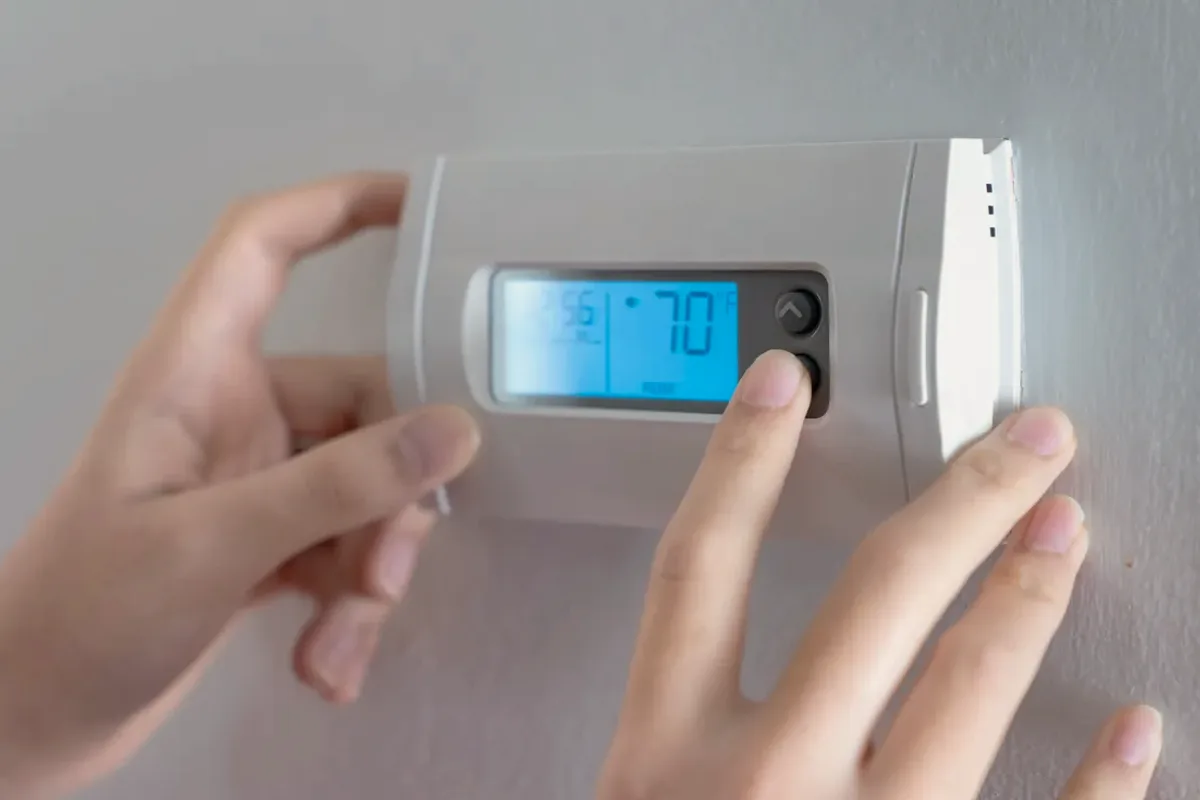
Request thermostat repair & replacement for a property in Pickering. Include the equipment, the problem or planned work, and your location so the request can be reviewed.
How can a homeowner tell whether a thermostat fault is separate from an HVAC equipment problem?
A thermostat that will not respond, displays an unexpected temperature, or appears to trigger frequent cycling may have a control or wiring fault, but the connected HVAC equipment can produce similar symptoms. Repair requires separating a thermostat problem from a furnace, boiler, heat pump, or air-conditioner fault. Replacement is a different decision: a new control must match the system’s wiring and functions. Assessment should therefore identify the equipment and controls before recommending repair, recalibration, or an upgrade.
Note the thermostat model, display behavior, settings, and when the heating or cooling starts and stops. Identify the connected equipment, including whether it is a heat pump, boiler, or conventional furnace, and record any recent control or wiring changes. These details matter because terminals and operating logic vary by system. Do not remove covers or handle wiring; internal electrical checks and control-circuit diagnosis require qualified assessment.
Display, temperature-reading, response, and wiring-related thermostat faults.
Frequent cycling diagnosis across the thermostat and connected HVAC controls.
Replacement compatibility for heat pumps, boilers, furnaces, and smart controls.
Assessment and Scope
Questions for the Proposed Work
01
Test the control symptom before replacing the unit
A blank display, inaccurate reading, or unresponsive setting can result from a thermostat fault, power issue, wiring problem, or a connected system that is not responding. Frequent starts and stops can also originate in equipment controls rather than the thermostat. Diagnosis should compare the displayed settings with the system’s response and inspect the control circuit appropriately. That distinction prevents replacing a thermostat when the underlying fault lies elsewhere.
02
Check compatibility before upgrading
A replacement thermostat must suit the connected equipment and its wiring. A heat pump may use control functions that differ from a boiler or a conventional furnace, and some systems use proprietary controls or line-voltage connections. Smart or programmable features do not establish compatibility on their own. Before choosing a model, confirm the equipment type, required terminals, control functions, and whether the existing wiring supports the proposed replacement.
03
Choose repair, recalibration, or replacement by findings
If the thermostat is compatible and has a correctable fault, repair or calibration may be appropriate. Replacement may make sense when the control is damaged, unsuitable for the connected system, or lacks functions the owner wants to use. Those choices should follow the test results and equipment requirements, rather than a rule based only on thermostat age. Any wiring or internal electrical work should be performed by a qualified person, not attempted by an occupant.
Compare the next step
Trace each existing control to its appliance and zone before specifying a replacement. Ask whether a common control is supported or separate devices remain necessary. Define remote access and scheduling for each system, and require a demonstration that the agreed operating modes do not create conflicting commands.
Thermostat wiring is not universal. Do not connect wires by colour alone or work on energized wiring; a compatible control must be configured for the equipment it serves.